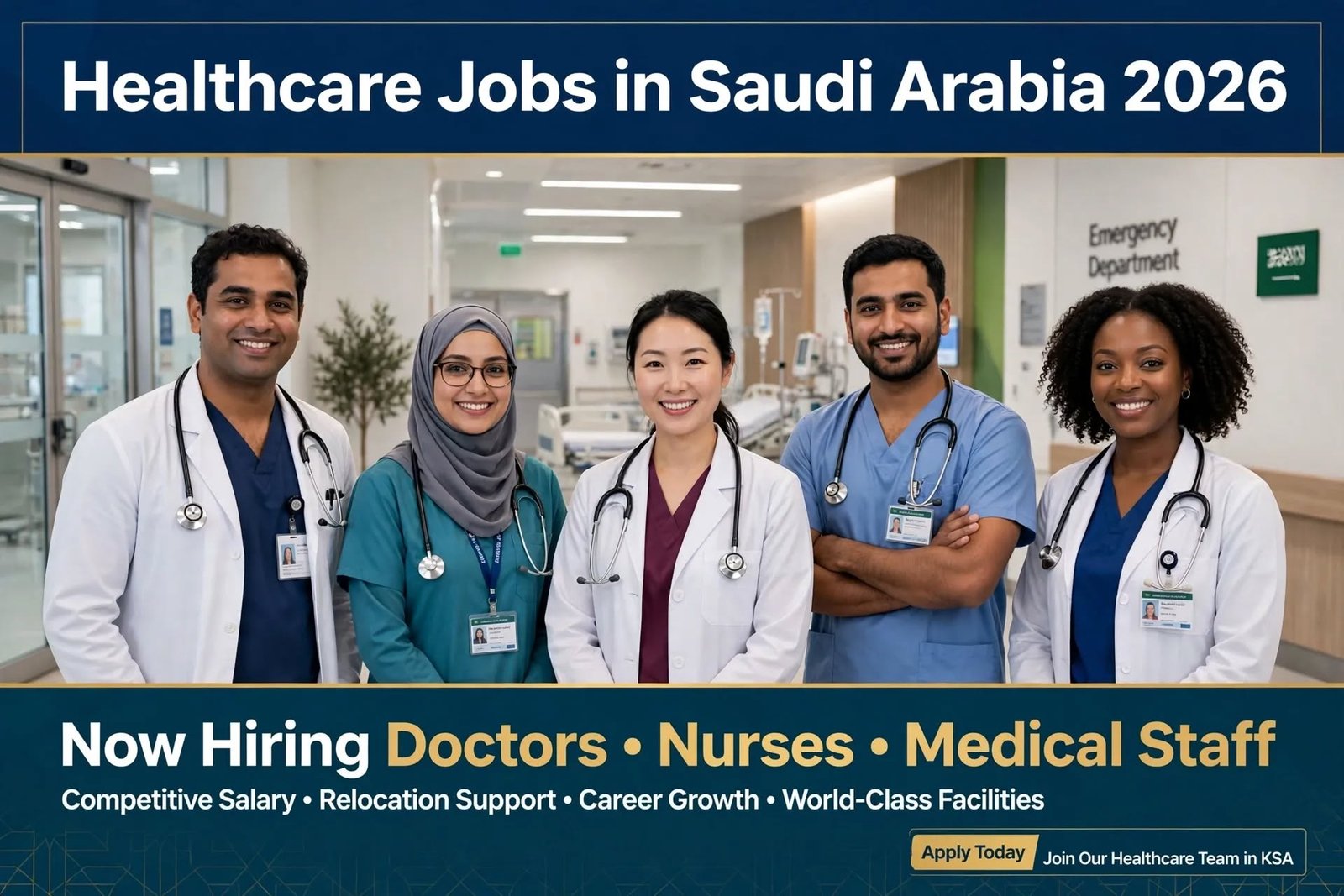
Hospitals are hard to build and even harder to staff. Saudi Arabia knows this well. The Kingdom is putting serious money into new hospitals, specialist centers, digital health platforms and a restructured care system. Buildings are the easy part. The real challenge is finding enough qualified people to run them.
That is where you come in, if you are a doctor, nurse, pharmacist, lab specialist, radiographer or other allied health professional. The Kingdom has long recruited healthcare workers from around the world, and its current expansion makes the market bigger and more varied than ever.
This guide explains why demand is rising, which roles are most needed, how licensing works, what to expect from pay and lifestyle, and how to build an application that stands out.
Why Saudi Arabia Is Investing So Heavily in Healthcare
Vision 2030 and the healthcare transformation
Healthcare is one of the key pillars of Vision 2030. The goals are straightforward: improve quality of care, widen access, raise efficiency and encourage private-sector participation. Reaching them means restructuring how hospitals are organized, funded and staffed.
A growing and changing population
A large and growing population creates steady demand for primary care, maternal health, pediatrics and emergency services. At the same time, lifestyle-related conditions such as diabetes, heart disease and obesity are major public-health concerns, which increases demand for chronic-disease management, diagnostics and preventive care.
Pilgrimage and large-scale events
The Kingdom hosts millions of pilgrims each year. This requires seasonal capacity, emergency readiness, infectious-disease surveillance and well-organized hospital networks, particularly in Makkah and Madinah.
Regional health clusters and privatization
Care is increasingly organized into regional health clusters that bring hospitals and clinics under one network, aiming for more coordinated, patient-centered service. Alongside this, the government encourages private providers and public-private partnerships, which opens more employers to healthcare professionals.
Read Also: Construction Jobs in Saudi Arabia
Digital health and modernization
Electronic records, telemedicine, mobile health apps and AI-assisted diagnostics are spreading. This creates new roles and expects existing staff to be comfortable with technology.
The Most In-Demand Healthcare Roles
Doctors and specialists
Both general practitioners and specialists are sought after. Fields that typically see strong demand include:
- Internal medicine and family medicine
- Emergency medicine and critical care
- Pediatrics and neonatology
- Obstetrics and gynecology
- Cardiology and oncology
- Radiology and anesthesiology
- Psychiatry and mental health
Senior consultants and fellowship-trained specialists often have the strongest negotiating position.
Nurses
Nursing is one of the largest recruitment categories. Hospitals need staff for general wards, intensive care, emergency, operating theaters, dialysis, maternity and pediatrics. Specialized nurses with ICU, theater or neonatal experience are particularly valued.
Pharmacists
Hospital pharmacists, clinical pharmacists and community pharmacists are needed as medication management and patient safety receive more attention.
Medical laboratory technologists
Diagnostic labs rely on skilled technologists across hematology, microbiology, biochemistry and molecular testing.
Radiographers and imaging technologists
X-ray, CT, MRI, ultrasound and nuclear medicine technologists are needed as hospitals expand their imaging capacity.
Respiratory therapists and anesthesia technicians
These roles are critical in ICUs, emergency rooms and operating theaters.
Physiotherapists and rehabilitation specialists
Physiotherapists, occupational therapists and speech therapists support recovery and long-term care, a growing area as the population ages.
Dentists and dental technicians
Both public and private dental services recruit practitioners and support staff.
Paramedics and emergency medical technicians
Emergency response services need trained responders, especially in big cities and pilgrimage areas.
Healthcare administrators, quality and informatics professionals
Hospital managers, quality and accreditation specialists, infection-control officers and health-informatics staff are increasingly in demand as organizations modernize.
Licensing and Qualification: What You Need to Know
The role of the regulator
Healthcare professionals in the Kingdom generally need to be registered and classified by the Saudi Commission for Health Specialties (SCFHS) before they can practice. This applies to doctors, nurses, pharmacists, technicians and most other clinical roles.
Typical steps
Requirements can vary by profession and change over time, but the process commonly includes:
- Primary-source verification of your degrees, training and prior licenses
- Professional classification, which assigns your title and level based on qualifications and experience
- A licensing or prometric-style exam, required for many professions
- Registration and issuance of a practice license, usually coordinated with your employer
Practical tips
- Start collecting documents early. Degree certificates, transcripts, internship records, experience letters and existing licenses can take time to assemble.
- Make sure experience letters are specific. They should state your job title, department, dates and responsibilities.
- Ask your employer how much support they provide. Many hospitals help with the licensing process, and some cover related fees.
- Check the latest requirements directly with the regulator. Rules, fees and exam formats are updated periodically.
Skills and Qualities Employers Value
Clinical and technical skills
- Strong foundational training and up-to-date clinical knowledge
- Relevant specialty experience, ideally in a hospital with comparable standards
- Familiarity with electronic health records
- Comfort with infection-control and patient-safety protocols
- Willingness to keep learning through continuing education
Soft skills that make a real difference
- Communication: patients and colleagues come from many backgrounds, and clear, respectful communication builds trust
- Cultural sensitivity: understanding local customs, family involvement in care and religious practices improves patient relationships
- Teamwork: multinational teams are the norm
- Resilience: busy departments and high patient loads require steadiness
- Language skills: English is widely used in hospitals, while basic Arabic helps greatly with patients and daily life
Where the Jobs Are
Riyadh
The capital has the largest concentration of hospitals, specialist centers, medical cities and research institutions. It is the first place most recruiters look.
Jeddah and Makkah region
This region combines large urban hospitals with seasonal pilgrimage demands.
Eastern Province
Dammam, Khobar and surrounding areas host major hospitals, including facilities connected to large industrial employers.
Madinah and other regions
Madinah, Qassim, Asir and other regions are also expanding facilities. Smaller cities may offer lower competition and quieter lifestyles, though with fewer amenities.
Who Hires Healthcare Professionals?
- Government hospitals and regional health clusters
- Large specialist and teaching hospitals
- Private hospital groups and clinics
- Military and national-guard health services
- Corporate and industrial health services
- Pharmaceutical and medical-device companies
- Diagnostic and imaging center chains
- Telehealth and digital-health startups
Each type of employer offers a different experience. Large teaching hospitals tend to offer more academic exposure, private groups may offer faster-paced environments and sometimes performance-based pay, and industrial health services often provide stable, structured working conditions.
Salary and Benefits: Look at the Whole Package
Pay depends on profession, specialty, experience, employer and city. Many roles are compensated tax-free in terms of income tax, which is part of the appeal for international professionals, but always confirm the details in your contract.
Instead of focusing only on base salary, compare the full package:
- Housing provided or allowance paid
- Transport allowance or vehicle
- Medical insurance for you and, in many cases, family members
- Annual leave and return flights
- Education allowance for children
- End-of-service benefits
- Licensing and relocation support
- Continuing education or conference support
Salary figures shift with market conditions, so rely on current recruiter guidance and recent offers rather than old numbers when negotiating.
Daily Life for Healthcare Workers in the Kingdom
Working environment
Hospitals are generally modern and well equipped, particularly in the major cities. Shift patterns, on-call duties and weekly schedules vary by employer, so ask about them before signing.
Living arrangements
Many hospitals provide staff housing or compounds, particularly for nurses and technicians. Compound living can make it easier to settle in, meet colleagues and manage daily logistics. Doctors and senior staff often have more flexibility to choose their own accommodation.
Culture and etiquette
Respect for local customs, dress expectations and prayer times matters in daily life and in patient care. Gender-sensitive care preferences are common, and understanding them helps you work smoothly with patients and families.
Localization and teamwork
Saudi Arabia is investing in training its own healthcare workforce. International professionals are often expected to teach, mentor and work closely with Saudi colleagues. Embracing this role is good for your career and for the healthcare system.
A Step-by-Step Plan to Get Hired
- Choose your target role and specialty clearly. A focused application beats a vague one.
- Prepare a professional CV. Include your qualifications, licenses, experience by department, procedures performed, equipment used and patient volumes where relevant.
- Organize your documents. Keep scanned, well-labeled copies of certificates, transcripts, license letters, references and ID documents.
- Begin license verification early. Starting the process while you search can shorten the time between offer and start date.
- Use reputable channels. Apply through hospital career pages, established recruiters and professional networks. Never pay anyone for a job offer.
- Prepare for interviews. Expect clinical scenario questions, questions about teamwork and patient safety, and discussions about why you want to work in the Kingdom.
- Review the contract carefully. Check duration, probation, working hours, leave, notice period, benefits and who covers licensing and travel costs.
- Plan your move. Arrange housing, family documents, schooling and healthcare for your dependents before arrival.
Challenges to Consider Honestly
- Credentialing takes time, and delays can affect your start date.
- Competition for top hospitals can be high, especially for senior and specialist posts.
- Cultural adjustment takes patience, from language to social norms.
- Workload and shift patterns may differ from what you are used to.
- Family considerations such as schooling, spouse employment and distance from home deserve careful thought.
- Scams and misleading agents target healthcare workers. Verify employers independently and be cautious about any request for upfront payment.
Career Growth and Future Trends
Professionals who plan ahead can build a strong career trajectory. Some trends to watch:
- Telemedicine and remote monitoring, expanding access beyond big cities
- Specialty centers and centers of excellence, which need advanced skills
- Preventive and lifestyle medicine, focused on chronic-disease control
- Health informatics and AI-assisted care, creating hybrid clinical and technical roles
- Quality, accreditation and patient-experience roles, as standards rise
- Home healthcare and long-term care, growing with demographic change
To grow, seek out additional certifications, take part in training programs, mentor junior colleagues and keep your skills current.
Conclusion
Saudi Arabia’s healthcare expansion is a long-term commitment with real consequences for professionals in the field. Doctors, nurses and technicians are at the center of it, and the range of roles, employers and locations is broad.
Success depends on preparation: understanding licensing, organizing your documents, comparing full packages, respecting local culture and choosing employers carefully. If you do that, a healthcare career in the Kingdom can offer strong professional experience, international exposure and meaningful work.
Frequently Asked Questions (FAQ)
1. Why is the demand for healthcare workers so high in Saudi Arabia?
The Kingdom is expanding and modernizing its healthcare system under Vision 2030, with new facilities, regional health clusters and growing patient needs that require many more qualified professionals.
2. Which healthcare roles are most needed?
Doctors and specialists, nurses, pharmacists, laboratory technologists, radiographers, respiratory therapists, physiotherapists and emergency responders are all in demand.
3. Do I need a license to work as a healthcare professional?
Generally yes. Most clinical professionals must be registered and classified by the Saudi Commission for Health Specialties. Check the latest requirements for your profession.
4. Is English enough, or do I need Arabic?
English is widely used in hospitals, and Arabic is rarely mandatory for expatriate clinicians. However, even basic Arabic improves patient communication and daily life.
5. Do employers help with the licensing process?
Many do, offering guidance or covering some costs, but the level of support varies. Ask about it before accepting an offer.
6. Where do most healthcare jobs exist?
Riyadh has the largest concentration, followed by Jeddah and Makkah, the Eastern Province and Madinah, with openings in other regions as well.
7. How can I avoid recruitment scams?
Never pay for a job offer, verify the employer through official channels, be cautious of unsolicited offers that seem too good to be true, and read every contract carefully before relocating.
3 thoughts on “Healthcare Jobs in Saudi Arabia: Why Doctors, Nurses and Technicians Are in Demand”