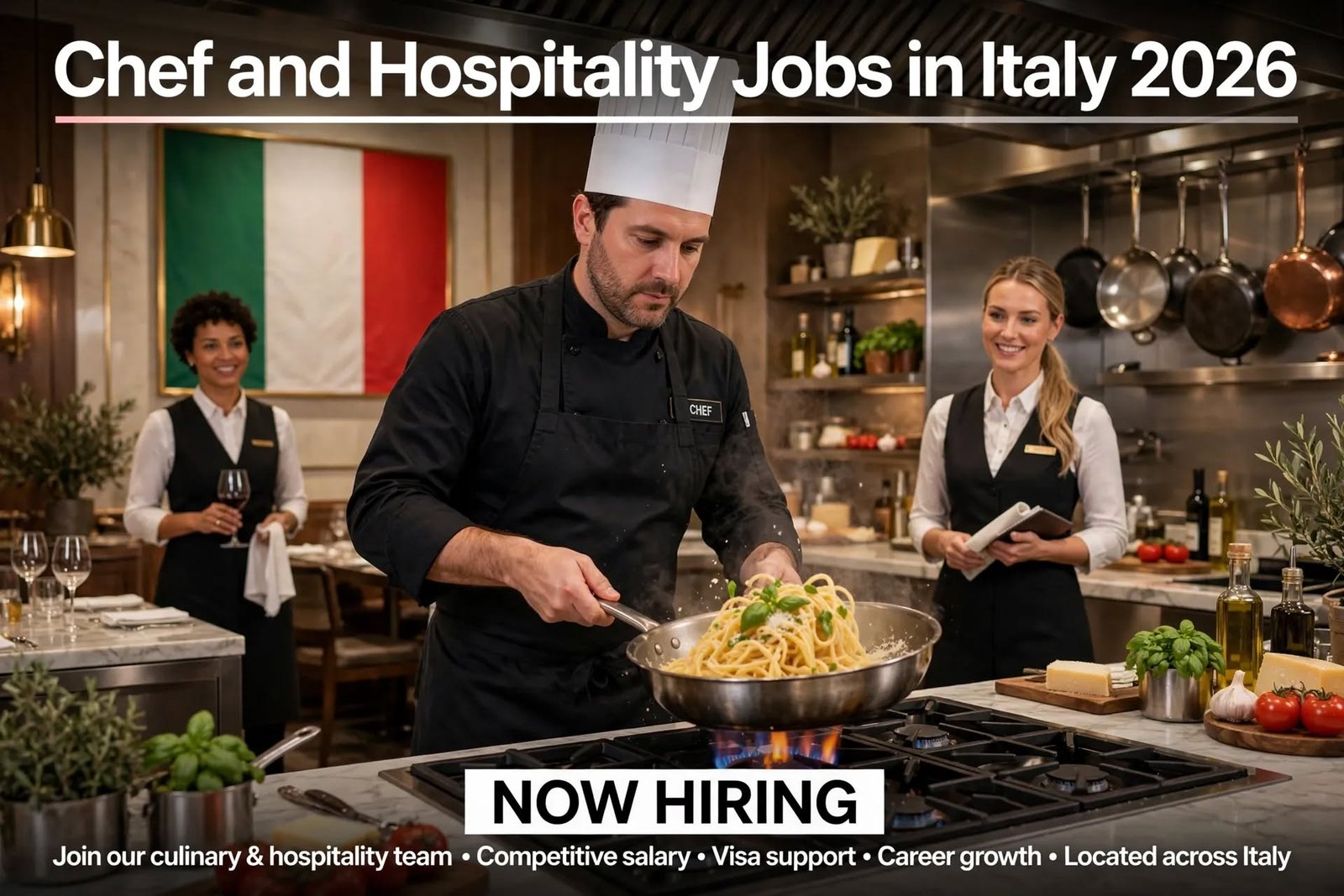
Few countries are as closely tied to food and hospitality as Italy. From a handmade pasta dish in a family trattoria to a tasting menu in a Michelin-starred restaurant on Lake Como, food is part of the national identity. It is also a major source of employment. Tourism and hospitality make up a large share of the Italian economy, and the sector needs a steady supply of skilled and willing workers every year.
If you are a cook, a hotel professional, a waiter, a barista or someone who simply loves working with people, chef and hospitality jobs in Italy can offer both income and experience. Employers regularly struggle to fill positions, especially during the busy spring-to-autumn season. That shortage creates real openings, including for international candidates.
This guide covers the types of jobs available, what they pay, the best regions to work in, how work permits generally function, and the practical steps for finding a position. Read it as a starting point and verify the legal details with official sources before you act.
Why Italy Is a Top Destination for Hospitality Careers
A Tourism Powerhouse
Italy is consistently one of the most visited countries in the world. Rome, Florence, Venice, the Amalfi Coast, Sicily, the Dolomites and the Italian lakes bring in millions of visitors annually. Every one of those visitors needs somewhere to sleep, eat and drink, which keeps demand for hospitality workers high.
A Food Culture Unlike Any Other
Italian cuisine is regional rather than uniform. A cook in Emilia-Romagna works with very different traditions from one in Sicily or Piedmont. For a chef, this is a chance to learn authentic techniques directly from people who have practiced them for generations. A year or two in an Italian kitchen carries weight on a résumé anywhere in the world.
Persistent Labor Shortages
Many Italian employers report difficulty finding enough kitchen and service staff. This is one reason the government includes seasonal tourism and hospitality work in its programs for hiring workers from outside the EU.
Types of Chef Jobs in Italy
Kitchens in Italy follow a clear hierarchy, often called the brigade system. Knowing the ranks helps you target the right role for your experience.
Entry-Level Kitchen Roles
- Kitchen helper (aiuto cuoco / lavapiatti): washing, basic prep and cleaning. A common way into the industry, and it requires little or no formal experience.
- Commis chef: an assistant who prepares ingredients and supports the station chefs. A good first step for people with basic culinary training.
Mid-Level Kitchen Roles
- Chef de partie (capo partita): runs one station, such as sauces, grill, pasta or pastry.
- Pizzaiolo: a specialist role for making and baking pizza. Skilled pizzaioli are valued across the country.
- Pastry chef (pasticcere): handles desserts, breads and baked goods, a craft with a deep tradition in Italy.
Senior Kitchen Roles
- Sous chef: the second in command, managing daily operations and staff.
- Head chef / executive chef (capo cuoco / chef): responsible for the menu, costs, quality and the whole kitchen team.
Hospitality Jobs Beyond the Kitchen
Not everyone in hospitality cooks. Italy’s hotels, resorts, bars and restaurants employ people in many other roles.
Front-of-House Roles
- Waiter / waitress (cameriere): one of the most common seasonal positions.
- Bartender and barista: coffee culture is central to Italian life, and good baristas are always needed.
- Sommelier: wine knowledge is a real advantage in a country with so many wine regions.
- Restaurant manager (maître): oversees the dining room and guest experience.
Hotel and Resort Roles
- Front desk agent / receptionist: language skills, especially English plus Italian, German or French, are valuable.
- Housekeeping staff: cleaning and preparing rooms, a steady source of seasonal work.
- Concierge: guides guests to local experiences and services.
- Hotel manager and F&B manager: senior roles for experienced professionals.
Other Opportunities
- Agriturismo staff: working holiday-style farm stays that combine hospitality with local food production.
- Cruise and resort staff: coastal and lake resorts hire large teams for the summer.
- Catering and banqueting: weddings are a huge business in Italy, particularly in Tuscany, Puglia and the lakes.
How Much Do Chefs and Hospitality Workers Earn in Italy?
Pay in Italy’s hospitality sector tends to be more modest than in northern Europe or the US, but living costs outside the big cities are also lower. Most employees fall under a national collective agreement for tourism and hospitality (often called the CCNL Turismo), which sets minimum pay by job level, working hours, paid leave and other conditions.
The figures below are rough monthly net estimates, and actual pay varies by employer, region and experience:
| Role | Approximate monthly net pay |
|---|---|
| Kitchen helper / dishwasher | €1,000 – €1,300 |
| Commis chef | €1,100 – €1,400 |
| Chef de partie | €1,300 – €1,700 |
| Sous chef | €1,600 – €2,200 |
| Head / executive chef | €2,000 – €4,000+ |
| Waiter / bartender | €1,100 – €1,600 (plus tips in some venues) |
| Hotel receptionist | €1,200 – €1,700 |
Things That Affect Your Pay
- Location: Milan, Rome and luxury destinations usually pay more but cost more to live in.
- Venue type: fine dining and five-star hotels typically offer higher wages than casual eateries.
- Accommodation: many seasonal employers provide housing or meals, which can significantly boost your real income.
- Language skills: speaking Italian often leads to better roles and pay.
Always ask whether your offer is gross or net, and check that your contract states the right collective agreement level.
Best Regions in Italy for Chef and Hospitality Work
Northern Italy
Milan is a business and fashion hub with a lively restaurant scene. Lombardy’s lakes, Lake Como and Lake Garda, depend heavily on seasonal hospitality staff. The Dolomites in Trentino-South Tyrol have a strong winter and summer season, and German is a big plus there.
Central Italy
Rome, Florence and the Tuscan countryside have year-round tourism, from city hotels to wine estates and agriturismi. Emilia-Romagna, home to Bologna and Parma, is a gastronomic heartland for anyone serious about cooking.
Southern Italy and the Islands
The Amalfi Coast, Puglia, Sicily and Sardinia have intense summer seasons. They offer a great deal of work from roughly April to October, and many employers include accommodation.
Choosing Where to Start
If you are new, smaller towns and coastal resorts can be easier entry points than the big cities. Competition is lower and employers often value reliability more than a polished résumé.
Work Permits and Visas: What to Know
This is the area where you need to be most careful. Rules change, so treat this section as an overview and confirm everything with official Italian government or embassy sources.
EU and EEA Citizens
If you hold citizenship from an EU or EEA country, you generally have the right to live and work in Italy without a visa.
Non-EU Citizens
Most non-EU nationals need a work visa tied to a specific job. A key route for hospitality is the Decreto Flussi, Italy’s quota system for foreign workers. It sets annual or multi-year limits for entries, including a category for seasonal work in tourism and hospitality.
In broad terms, the process works like this:
- An Italian employer applies for authorization on your behalf during the official application window. You usually cannot apply on your own.
- The authorization (nulla osta) is issued if your employer’s application is approved and your place falls within the quota.
- You apply for the visa at the Italian embassy or consulate in your home country.
- After arriving, you complete formalities such as applying for a residence permit (permesso di soggiorno) and obtaining your tax code (codice fiscale).
Important Warnings
- Never pay anyone who promises a guaranteed job or visa. Visa and job-offer scams targeting Italy applicants are common.
- A genuine employer applies for the authorization, and you should receive proper documentation.
- Quotas are limited and application windows can be competitive, so timing matters.
Skills and Qualifications Employers Look For
Culinary and Professional Skills
- Formal culinary training helps, but hands-on experience is often valued just as much.
- Knowledge of food hygiene and safety (HACCP) is a standard requirement in Italian kitchens.
- Speed, consistency and the ability to work under pressure matter in busy service periods.
Language Skills
You can find work with basic Italian, but even a modest level opens up more doors. Learning kitchen vocabulary and polite service phrases before you arrive shows commitment. In international hotels and tourist areas, English remains very useful, and German or French can set you apart.
Soft Skills
- Reliability: turning up on time and finishing the season is highly valued.
- Teamwork: kitchens run on cooperation.
- Adaptability: you will need to adjust to long shifts, new customs and regional differences.
- Respect for tradition: Italian chefs are proud of their cuisine, so humility and curiosity go a long way.
How to Find Chef and Hospitality Jobs in Italy
Step-by-Step Job Search Plan
- Prepare a clear, honest CV. Highlight your kitchen or service experience, training and languages. A one- or two-page CV in English, ideally with an Italian version, works well.
- Pick your target roles and regions. Be realistic about your level and the season you want.
- Search reputable job platforms. Look at established job boards, hotel group career pages and hospitality-specific sites. Local Italian job sites often list more seasonal roles than international ones.
- Contact employers directly. Many hotels and restaurants hire by email or through their websites. A short, polite message in simple Italian can stand out.
- Use networks. Culinary schools, former colleagues and online hospitality communities can lead to genuine openings.
- Check for official recruitment channels. Some government and employer programs support hiring from abroad, so check what your home country offers.
- Prepare for interviews. Many are by video call. Be ready to discuss your experience, availability and any skills tests.
Tips for Seasonal Workers
- Apply early, often several months before the season starts.
- Ask what is included: housing, meals, uniform and days off.
- Make sure you receive a written contract before you travel.
Life as a Hospitality Worker in Italy
Working Hours and Conditions
Hospitality work is demanding. Expect long shifts, weekend and holiday work, and split shifts in some restaurants. The collective agreement sets limits and rights, but peak season can still be intense.
Cost of Living
Housing is usually the biggest expense. Cities like Milan and Rome cost much more than smaller towns. If your employer offers accommodation, that can make saving money far more realistic.
Culture and Community
Italian workplaces often have a strong family feel, and meals together are an important ritual. If you show respect, learn a little of the language and take part, you will usually be welcomed warmly.
Career Growth: Turning a Job into a Career
Italy rewards people who stay curious. A typical path might look like this:
- Start as a kitchen helper or commis in a seasonal role.
- Gain skills at different venues and regions.
- Earn certificates in food safety, pastry, wine or hospitality management.
- Move to chef de partie, sous chef or supervisor roles.
- Eventually pursue head chef, restaurant manager or your own venture.
Many people use Italian experience as a springboard to work in other countries, or to open their own restaurant back home with an authentic Italian concept.
Common Mistakes to Avoid
- Falling for scams: if a job sounds too good and asks for money upfront, walk away.
- Ignoring the contract: read pay, hours and duties before you sign.
- Underestimating language needs: even basic Italian will make daily life easier.
- Arriving without savings: keep a small buffer for your first weeks.
- Skipping official steps: work only with the right permits to protect yourself legally.
Conclusion
Chef and hospitality jobs in Italy offer more than a paycheck. They give you the chance to work inside one of the world’s great food cultures, build skills that travel anywhere and meet people from all over the world. The sector’s steady demand for workers means opportunities exist at every level, from kitchen helper to head chef and from seasonal waiter to hotel manager.
Success comes down to preparation. Choose the right role and region, build a clear CV, learn some Italian, understand the work permit process and stay alert to scams. If you do that, Italy’s kitchens and hotels can become the start of a rewarding career.
Frequently Asked Questions (FAQ)
1. Can foreigners get chef jobs in Italy?
Yes. EU citizens can work freely, while non-EU citizens generally need a work visa and a sponsoring employer, often through the Decreto Flussi quota system.
2. Do I need to speak Italian to work in hospitality in Italy?
Not always, especially in tourist areas and international hotels, but even basic Italian improves your chances, your pay and your daily life.
3. How much does a chef earn in Italy?
Pay varies widely. Entry-level cooks may earn roughly €1,100 to €1,400 net per month, while head chefs at upscale venues can earn considerably more.
4. When is the best time to apply for seasonal hospitality jobs?
Start several months ahead. Many employers hire from winter into early spring for the main season running from about April to October.
5. Do employers provide accommodation?
Many seasonal employers, especially in resorts and rural areas, offer housing or meals. Always confirm this in writing.
6. Is it possible to find hospitality jobs in Italy with visa sponsorship?
It is possible, but sponsorship is handled through an Italian employer applying for authorization. Be cautious of anyone who asks you to pay for a guaranteed visa.
7. Which cities are best for chef jobs?
Milan, Rome, Florence and Bologna offer strong restaurant scenes, while Lake Como, the Amalfi Coast and Sicily are great for seasonal work.
8. Do I need a culinary degree?
Not necessarily. Many employers value practical experience, though certificates in food safety and hospitality can help.
1 thought on “Chef & Hospitality Jobs in Italy”