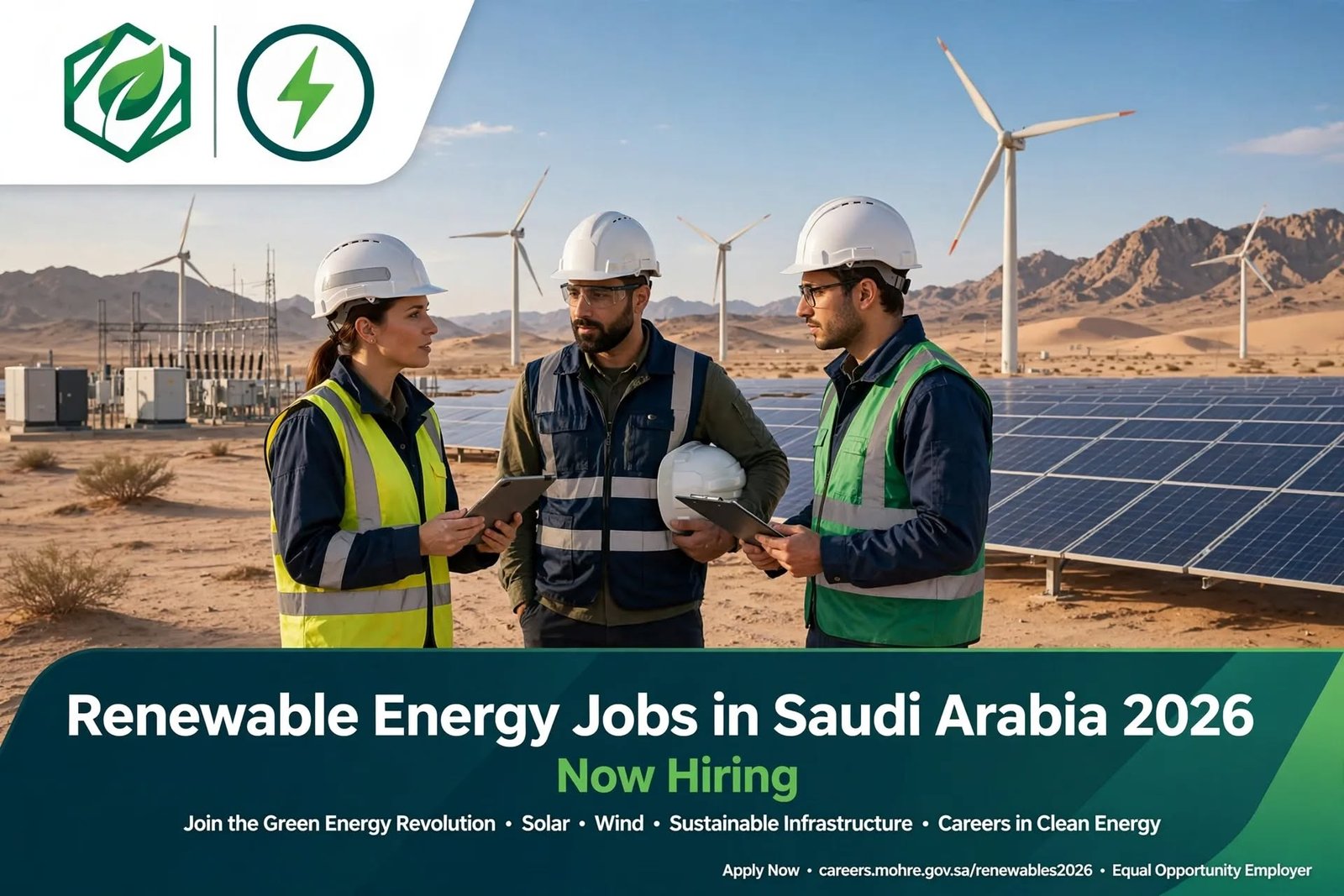
For most of the last century, Saudi Arabia’s name was almost synonymous with oil. Today, the Kingdom is also building some of the largest solar and wind projects in the region, with a stated ambition to produce a large share of its electricity from renewable sources.
That ambition has a very practical consequence: it needs engineers. Solar designers, wind specialists, grid engineers, storage experts, project managers and operations teams are all being recruited to plan, build and run a new energy system.
If you work in power, electrical engineering, mechanical engineering or sustainability, or you’re thinking of moving into the sector, this guide explains why demand is rising, which roles matter, which employers to watch, what skills are expected and how to build a strong application.
Why Saudi Arabia Is Investing in Solar and Wind
Vision 2030 and energy diversification
Vision 2030 aims to reduce reliance on a single industry and build a more diversified economy. Energy is a natural focus. The Kingdom has set a target to generate roughly half of its electricity from renewable sources by 2030, with the rest largely from gas, and has also announced a long-term net-zero ambition. Targets and timelines can be updated, so check the latest official figures when you plan your career.
Read Also; Data Analyst Jobs in Saudi Arabia
Natural advantages
Saudi Arabia has abundant sunshine, large open land areas and promising wind conditions in several regions. These advantages help bring down the cost of electricity from solar and wind, making renewable projects commercially competitive.
Freeing up oil and gas
Burning crude oil and gas for domestic power generation uses fuel that could be exported or used as feedstock. Replacing some of that with solar and wind makes economic sense, which is one reason the push is seen as strategic rather than purely environmental.
Rising electricity demand
A growing population, new cities, industrial zones, data centers and cooling needs in a hot climate all increase electricity demand. Meeting that demand while keeping emissions in check requires a major expansion of clean capacity and grid infrastructure.
Beyond power generation
Related areas, such as energy storage, green hydrogen, smart grids and energy efficiency, are also growing. They create additional roles for engineers who want to work at the edge of the energy transition.
Who Hires Renewable Energy Engineers?
ACWA Power
ACWA Power is a Saudi-based developer, investor and operator of power and water desalination plants, with a significant renewable portfolio in the Kingdom and abroad. It hires engineers, project developers, financial analysts, construction managers and operations specialists.
Saudi Electricity Company (SEC)
SEC is the main electricity provider in the Kingdom, responsible for generation, transmission and distribution. As the grid evolves to absorb more renewable power, SEC needs engineers in grid planning, protection, SCADA, smart metering and maintenance.
Government-linked programs and procurement bodies
Entities that plan and procure renewable capacity, such as national renewable program offices and power procurement agencies, hire policy, commercial and technical professionals who assess bids and manage contracts.
Giga-project developers
Developments such as NEOM and the Red Sea Project have announced strong renewable energy ambitions, including large solar installations, storage and microgrids. Their energy and utility subsidiaries recruit engineers for design, procurement and operations.
International EPC contractors and equipment manufacturers
Engineering, procurement and construction firms, along with solar panel, inverter, turbine and battery suppliers, hire site engineers, project managers, commissioning specialists and technical sales engineers.
Oil, gas and industrial companies
Energy majors and industrial groups are investing in solar power for their own operations, as well as in carbon capture, hydrogen and efficiency projects. These employers offer routes for engineers with conventional energy backgrounds.
Research institutions and universities
Research centers and universities work on solar technology, materials, storage and desalination powered by renewables, offering opportunities for engineers with a research orientation.
The Most In-Demand Roles
Solar PV design engineer
Designs panel layouts, electrical systems, inverters and interconnection plans for utility-scale and commercial installations. Strong knowledge of PV design software and standards is important.
Wind energy engineer
Works on resource assessment, turbine selection, site layout, installation and performance monitoring. Experience with wind data analysis and turbine technology is valuable.
Electrical power systems engineer
Handles substations, transformers, protection, grid codes and system studies. This is one of the most in-demand skill sets because every new project must connect safely to the grid.
Energy storage engineer
Designs and integrates battery energy storage systems that balance supply and demand. This specialty is growing quickly.
Project engineer and project manager
Coordinates schedules, budgets, contractors and approvals from development through commissioning. Experience on large-scale power projects is highly valued.
Commissioning engineer
Tests and energizes systems before handover, ensuring equipment performs as designed.
Operations and maintenance (O&M) engineer
Keeps plants running reliably, monitors performance, troubleshoots faults and plans maintenance. O&M teams are needed for the full lifetime of a plant.
SCADA, controls and automation engineer
Manages monitoring and control systems that supervise plants and grids.
Energy analyst and development specialist
Evaluates project economics, forecasts output, studies tariffs and supports bids and investment decisions.
HSE officer
Ensures safe working practices on construction sites and operating plants, particularly relevant in high-heat, high-voltage environments.
Sustainability and carbon specialist
Supports emissions measurement, reporting and decarbonization planning for organizations.
Skills and Qualifications Employers Expect
Education
Most technical roles require a bachelor’s degree in electrical, mechanical, power or energy engineering. Related degrees such as civil, chemical or environmental engineering can also be relevant, especially for development, construction or sustainability roles. A master’s degree can help for specialized or research-oriented positions.
Technical skills
- PV system design and simulation tools
- Power systems analysis, including load flow and short-circuit studies
- Grid code and interconnection knowledge
- Energy yield assessment and performance ratio analysis
- Battery storage fundamentals
- SCADA and monitoring systems
- Technical standards such as IEC and IEEE
- Project scheduling and cost control tools
- Data analysis with Excel, Python or similar tools for performance monitoring
Helpful certifications
- PMP for project managers
- Professional engineering credentials from recognized bodies
- NEBOSH or IOSH for HSE roles
- Manufacturer or vendor certifications for specific equipment
- Energy management or sustainability certifications
Soft skills
- Cross-cultural teamwork, since project teams are international
- Clear technical communication
- Problem-solving under tight deadlines
- Resilience in harsh climates and remote sites
- Commercial awareness, particularly for developers and consultants
Where the Jobs Are
Riyadh
Head offices, ministries, procurement bodies and many developers are based in the capital, so it hosts a large share of corporate, commercial and planning roles.
Eastern Province
The region has a strong industrial and energy presence, including utility and corporate offices.
Western and northwestern regions
Projects along the Red Sea coast and in the northwest are tied to giga-developments and large solar and wind sites. These roles often involve site work and remote accommodation.
Desert and remote project sites
Utility-scale solar and wind plants are typically built in sparsely populated areas with strong resources. Site-based jobs can be rewarding, but often involve camp living, rotations and extreme weather.
Salary and Package Considerations
Pay depends on discipline, experience, employer type and location. Developers, international contractors and utilities may structure packages differently.
When comparing offers, look at the entire package:
- Base salary
- Housing or housing allowance
- Transport allowance
- Medical insurance for you and, where offered, family
- Annual leave and return flights
- Site or rotation allowances
- End-of-service benefits
- Performance bonuses
- Training and certification support
Salary levels change with market conditions, so rely on current recruiter guidance and recent salary guides rather than old figures.
Life and Work in the Kingdom’s Energy Sector
Working environment
Corporate roles in major cities involve modern offices and international teams. Site roles involve high temperatures, safety-critical procedures and long shifts. Always ask about rotation schedules and site conditions.
Localization and knowledge transfer
The Kingdom is investing in training Saudi engineers for the energy sector. International professionals are often expected to mentor and share expertise. Embracing this builds goodwill and strengthens your own reputation.
Culture and etiquette
Respect for local customs, prayer times and professional etiquette helps you build trust with colleagues and partners. Many workplaces are multinational, so cultural flexibility is an asset.
A Step-by-Step Plan to Get Hired
- Pick your specialty. Solar design, power systems, O&M, storage, development or project management each have different requirements.
- Build relevant experience. If you work in conventional power or oil and gas, highlight transferable skills such as grid connection, protection systems, commissioning or project delivery.
- Upskill in renewables. Short courses in PV design, battery storage or grid integration can bridge gaps, especially if you are switching from another discipline.
- Write a results-focused CV. Quantify your achievements: megawatts installed, budgets managed, availability improved, schedules met.
- Showcase your projects. Describe scale, technology, location and your exact role. Employers trust specifics.
- Optimize LinkedIn. Use keywords like solar PV, BESS, grid integration, EPC and O&M. Follow target employers and engage with industry content.
- Apply through legitimate channels. Use company career pages, reputable recruiters and professional networks. Never pay a fee for a job.
- Prepare for technical interviews. Expect questions on design choices, fault analysis, standards, safety and how you handle project delays or commercial pressure.
- Check credential and visa requirements. Employers usually manage sponsorship, but professional verification may be needed, so gather documents early.
- Read your contract carefully. Review duration, probation, working hours, rotation, benefits and notice terms before signing.
Challenges and Realities
A candid view helps you decide wisely.
- Competition for senior roles can be strong, and employers often prefer candidates with utility-scale experience.
- Project timelines and priorities can shift. Maintain adaptable skills and a strong network.
- Remote sites may mean limited amenities and long periods away from family.
- Heat, dust and long hours are part of site work.
- Localization priorities shape hiring, so expect collaborative, knowledge-sharing roles.
- Technology evolves fast. Storage, hydrogen and digital tools are changing the skills employers want.
- Scams exist. Be cautious about unsolicited offers or requests for upfront payment.
Trends Shaping Renewable Energy Careers
- Battery storage becoming standard alongside solar and wind
- Green hydrogen and related industrial projects
- Smart grids and digitalization, including forecasting and remote monitoring
- Grid expansion and interconnection, increasing demand for transmission engineers
- Energy efficiency and demand management in buildings and industry
- Local manufacturing and supply chains, creating roles in production and quality
- Sustainability reporting and carbon markets, adding non-engineering career paths
Engineers who combine technical depth with digital skills and commercial understanding will be best placed to move up.
Conclusion
Saudi Arabia’s investment in solar and wind is changing the shape of its energy sector and creating long-term career opportunities. From utility-scale solar farms to grid upgrades, storage and operations, the Kingdom needs capable engineers and specialists to deliver the transition.
If you want to be part of it, focus on strengthening your technical foundations, building project experience, understanding the local market and choosing employers and roles thoughtfully. The opportunities are real, and they reward professionals who prepare well and keep learning.
Frequently Asked Questions (FAQ)
1. Why is demand for renewable energy engineers rising in Saudi Arabia?
The Kingdom is expanding solar and wind capacity under Vision 2030 to diversify its energy mix, meet growing electricity demand and support its sustainability goals, which requires many skilled engineers.
2. Who are the main employers?
Typical employers include ACWA Power and Saudi Electricity Company, along with giga-project developers, international EPC contractors, equipment manufacturers, oil and gas companies and research institutions.
3. Which engineering degrees are most relevant?
Electrical, mechanical, power and energy engineering are the most common. Civil, chemical and environmental engineering can also lead into renewable roles.
4. Can I switch from oil and gas or conventional power?
Yes. Skills in electrical systems, protection, commissioning, project management and HSE transfer well. Short courses in PV design or storage can help close gaps.
5. Is Arabic necessary?
Usually not for technical roles, as English is widely used. Basic Arabic helps with daily life and workplace relationships.
6. Where are most jobs located?
Riyadh hosts many head offices and planning roles, while project and site roles are spread across the Eastern, Western and northwestern regions and remote desert sites.
7. How do I avoid recruitment scams?
Never pay for a job offer, verify the employer through official websites, be cautious of offers that seem too good to be true, and read your contract carefully before relocating.