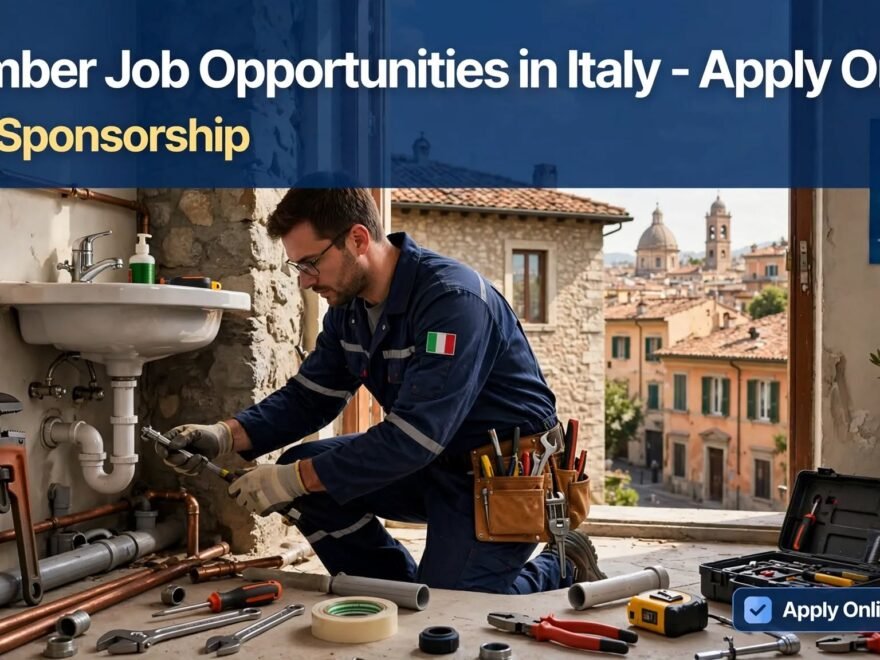
Job Opportunities for Plumbers in Italy: Italy is famous for its art, food and history, but behind every beautiful villa, hotel and apartment block is a hidden network of pipes, boilers and heating systems. Someone has to install and repair all of it. That someone is the plumber, known in Italian as the idraulico or termoidraulico.
Italy has a growing shortage of skilled tradespeople. Many experienced plumbers are close to retirement, and fewer young Italians are entering the trade. At the same time, the country is renovating older buildings, upgrading heating systems and building new energy-efficient homes. The result is steady demand for skilled plumbers, including foreign workers.
This guide covers everything you need to know about plumber jobs in Italy: what the work involves, how much you can earn, which visa routes exist, which documents you need and how to apply online without falling for scams.
Why Italy Needs Plumbers Right Now
Several factors are driving demand for plumbing professionals across the country.
An Ageing Skilled Workforce
A large share of Italy’s tradespeople are over 50. As they retire, small plumbing firms struggle to find replacements. Many family-run businesses are now open to hiring foreign workers who have real experience.
Read Also: Hotel Staff Jobs in Qatar
Building Renovation Programmes
Italy has a huge stock of old buildings, and many need new pipework, bathrooms and heating. Government incentives for energy efficiency have kept renovation activity high, and every renovation needs plumbers.
Tourism and Hospitality
Hotels, resorts, agriturismi and restaurants need constant plumbing maintenance. Seasonal peaks in places like Tuscany, the Amalfi Coast, Sicily and the Alps create extra work.
Energy-Efficient Heating
Heat pumps, solar water heating and modern condensing boilers are replacing older systems. Plumbers who understand these technologies are especially in demand.
What Does a Plumber Do in Italy?
Italian plumbing covers more than fixing leaks. Depending on the employer, your daily work may include:
- Installing and repairing water supply and drainage systems
- Fitting bathrooms, kitchens, taps, toilets and showers
- Installing and servicing boilers and central heating systems
- Working with radiators and underfloor heating
- Fitting solar thermal and heat pump systems
- Reading technical drawings and following building plans
- Testing systems for pressure and safety
- Handling emergency call-outs
- Giving customers clear advice and quotes
Common Job Titles
When searching online, try both English and Italian terms:
- Idraulico (plumber)
- Termoidraulico (heating and plumbing technician)
- Installatore di impianti idrico-sanitari (sanitary systems installer)
- Operaio specializzato (skilled worker)
- Manutentore (maintenance technician)
Plumber Salary in Italy
Pay depends on experience, region and employer, but here is a general picture. Treat these as rough ranges and check current figures before you decide.
| Experience Level | Approximate Monthly Net Pay |
|---|---|
| Entry-level / helper | €1,100 – €1,400 |
| Experienced plumber | €1,400 – €1,900 |
| Senior / team leader | €1,900 – €2,500+ |
| Self-employed with clients | Varies widely |
What Affects Your Pay?
- Region: Northern cities like Milan, Bologna and Turin usually pay more than the South, though living costs are also higher.
- Specialisation: Heating, boiler and heat pump skills often earn a premium.
- Contract type: Pay is set by national collective agreements (CCNL), so your contract should state your category and level.
- Overtime and emergency work: Extra hours are usually paid at a higher rate.
Many employers also provide 13th and 14th month salary payments, which are standard in Italy, plus paid leave and social contributions.
Who Can Work as a Plumber in Italy?
EU and EEA Citizens
If you hold citizenship from an EU or EEA country, you can live and work in Italy without a visa. You can search and apply for jobs directly.
Non-EU Citizens
Most foreign applicants fall here. You need a work visa linked to a job offer. The most common route is Italy’s Decreto Flussi system.
Understanding the Decreto Flussi (Quota System)
The Decreto Flussi is the Italian government’s framework that sets how many non-EU workers can enter Italy for work each year. Construction and skilled trades, which include plumbing, are among the sectors that regularly receive quotas.
How It Works, Step by Step
- An Italian employer applies for you. You cannot apply for the quota yourself. The employer submits a request through the official online immigration portal during the designated application windows.
- The authorities check the application. The local immigration office (Sportello Unico per l’Immigrazione) and other bodies review it.
- A “nulla osta” is issued. This is the work authorisation that allows you to apply for a visa.
- You apply for the visa. Take the nulla osta to the Italian embassy or consulate in your country.
- You travel to Italy. After arrival, you sign your residence contract and apply for your permesso di soggiorno (residence permit).
Important Points
- Quota numbers and rules change, so always check the latest official announcements.
- Application windows (often called “click days”) are competitive.
- Some countries have preferential quotas under bilateral agreements.
- The employer must show they could not find suitable workers locally.
Key takeaway: the “apply online” step is usually done by the employer, while your job is to find genuine employers and prepare your documents.
Skills and Qualifications Employers Look For
Technical Skills
- Pipe fitting in copper, PVC, PEX and multilayer materials
- Soldering, brazing and pipe joining
- Boiler and heating installation
- Reading blueprints and technical drawings
- Pressure testing and leak detection
- Basic knowledge of safety rules on construction sites
Certificates and Training
- A trade diploma or vocational certificate in plumbing or heating
- Proof of work experience (reference letters, employment records)
- Safety training certificates, which are valued by employers
- For heating and gas work, Italian rules require installers to meet specific technical requirements, so employers often prefer workers who can adapt quickly to local standards
Soft Skills
- Reliability and punctuality
- Good communication with customers and colleagues
- Willingness to learn Italian
- Problem-solving under pressure
Language Requirements
You can often start with basic Italian, but the better your language skills, the better your pay and options. Even A2 level Italian helps you understand safety instructions and talk with clients. Many workers reach B1 within a year of living in Italy.
Where to Find Plumber Jobs in Italy Online
Searching online is the best way to start. Here are the most useful types of platforms.
1. Major Job Portals
General job boards in Italy list thousands of trade positions. Search for “idraulico,” “termoidraulico” or “plumber” and filter by region.
2. LinkedIn
Many Italian construction companies, installation firms and facility management companies post openings here. Optimise your profile with keywords like plumber, pipefitter, heating systems, installation.
3. Company Websites
Large installation and construction firms often have a “Lavora con noi” (Work with us) section. Apply directly with your CV.
4. Recruitment Agencies
Staffing agencies (agenzie per il lavoro) in Italy handle many trade placements. Some work with international candidates.
5. Regional Employment Services
Italy’s public employment centres and regional job portals list local vacancies, often for smaller companies.
6. Social Media and Professional Groups
Facebook groups and professional communities sometimes share openings. Be careful here, as scams are more common on social media.
How to Apply Online: A Step-by-Step Process
Step 1: Prepare an Italian-Style CV
Keep it to one or two pages and include:
- Personal details and contact information
- Professional summary
- Work experience with dates and responsibilities
- Training and certificates
- Languages and skill levels
- A professional photo is common in Italy but not mandatory
Step 2: Write a Short Cover Letter
Explain who you are, what experience you have and why you want to work in Italy. Keep it specific and honest. If possible, include a line or two in Italian.
Step 3: Gather Your Documents
Have digital copies ready of:
- Passport
- Trade certificates and diplomas
- Reference letters from past employers
- Police clearance certificate (usually required later)
- Passport-size photographs
Step 4: Apply to Many Employers
Don’t rely on one application. Send tailored applications to multiple companies and follow up politely after a week or two.
Step 5: Prepare for an Online Interview
Most employers will start with a video call. Be ready to:
- Describe your past projects
- Answer technical questions about pipes, boilers or safety
- Explain your visa situation clearly
- Show your motivation to live and work in Italy
Step 6: Get a Written Job Offer or Contract
A genuine employer will provide a clear job offer. Read it carefully and check that it includes salary, working hours, job title and contract length.
Avoiding Job Scams
Because “Italy work visa” searches are so popular, scammers target job seekers. Protect yourself with these rules.
- Never pay for a job offer. A real employer does not charge fees to hire you.
- Be suspicious of guaranteed visas. No one can guarantee a visa. Only the authorities decide.
- Verify the company. Check that it has a website, a registered address and a VAT number (partita IVA).
- Watch for pressure tactics. “Pay today or lose the job” is a classic warning sign.
- Use official sources. Rules and application steps are published by Italian government bodies and embassies.
- Avoid unofficial agents who promise easy entry for large payments.
If something feels too good to be true, it probably is.
Living and Working in Italy as a Plumber
Working Hours
A standard full-time week is around 40 hours. Overtime is regulated and usually paid extra.
Contracts
Common contract types include fixed-term (tempo determinato) and permanent (tempo indeterminato). Many foreign workers start with a fixed-term contract and move to permanent after proving themselves.
Cost of Living
Rent is the biggest expense. Smaller towns and southern regions are cheaper than Milan, Rome or Florence. Many workers share apartments in the beginning to save money.
Healthcare and Social Security
Employees contribute to Italy’s social security system, which gives access to public healthcare and other benefits.
Career Growth
After gaining experience, you can:
- Become a team leader or site supervisor
- Specialise in heating, solar or heat pump technology
- Obtain further qualifications
- Eventually start your own plumbing business
Tips to Increase Your Chances of Getting Hired
- Learn basic Italian before you arrive. Free apps and online courses make this easy.
- Highlight specialised skills such as boiler installation or renewable heating.
- Keep proof of your experience. Photos of past projects, reference letters and certificates strengthen your application.
- Be flexible about location. Smaller towns often have fewer applicants and more openings.
- Apply early. Employers plan hiring around quota application periods, so start your search well in advance.
- Stay informed. Visa rules and quotas change from year to year.
- Network. Connect with other tradespeople and recruiters on professional platforms.
Common Challenges and How to Handle Them
Language Barrier
Start learning early and practise daily. Even basic technical vocabulary (tubo, rubinetto, caldaia, scarico) helps on the job.
Recognition of Qualifications
Your foreign certificates may not automatically match Italian standards. Employers may test your skills or provide additional training.
Paperwork Delays
Visa and permit processes can take months. Be patient, keep copies of everything and respond to requests quickly.
Adapting to Local Standards
Italian plumbing codes and materials may differ from those in your country. Be ready to learn and ask questions.
Frequently Asked Questions (FAQ)
Can I apply for plumber jobs in Italy from abroad?
Yes. You can search for employers and apply online from your home country. For non-EU citizens, the formal work authorisation is processed through the employer and the Decreto Flussi system.
Do I need to speak Italian?
Basic Italian is not always required to start, but it greatly improves your chances and daily life. Aim for at least A2 level.
How much do plumbers earn in Italy?
Most plumbers earn roughly €1,100 to €2,500 per month depending on experience, region and specialisation. Senior and self-employed plumbers can earn more.
Is a plumbing certificate mandatory?
Employers prefer candidates with formal training or proven experience. Certificates and reference letters make your application much stronger.
Can my employer sponsor my visa?
Yes, in the quota system the employer submits the request for your work authorisation. Not every employer is willing or able to do this, so ask early in the process.
How long does the process take?
It can take several months from the employer’s application to your arrival in Italy. Timelines vary by region and year.
Can I bring my family?
After you obtain a residence permit and meet income and housing requirements, you may be able to apply for family reunification. Check the current rules for your case.
Is it safe to apply online?
Yes, if you use trusted platforms, verify employers and never pay for job offers.
Can I work as a self-employed plumber?
Eventually yes, but you must meet legal and licensing requirements. Most people start as employees to learn the system.
Conclusion
Italy offers real job opportunities for plumbers, driven by an ageing workforce, constant renovation work and growing demand for modern heating technology. If you have solid experience, a willingness to learn Italian and a clear plan, this can be a rewarding career move.
Remember the essentials. Prepare a strong CV and documents, apply to genuine employers online, understand how the Decreto Flussi works, and stay alert to scams. Never pay for a job offer, and always check information against official Italian government and embassy sources.
Start today by updating your CV, practising basic Italian and sending your first applications. With patience and preparation, a plumbing career in Italy can become a reality.
Disclaimer: Salary figures, visa rules and quotas change regularly. Always confirm current details with official Italian authorities or your nearest Italian embassy before making decisions.
One comment