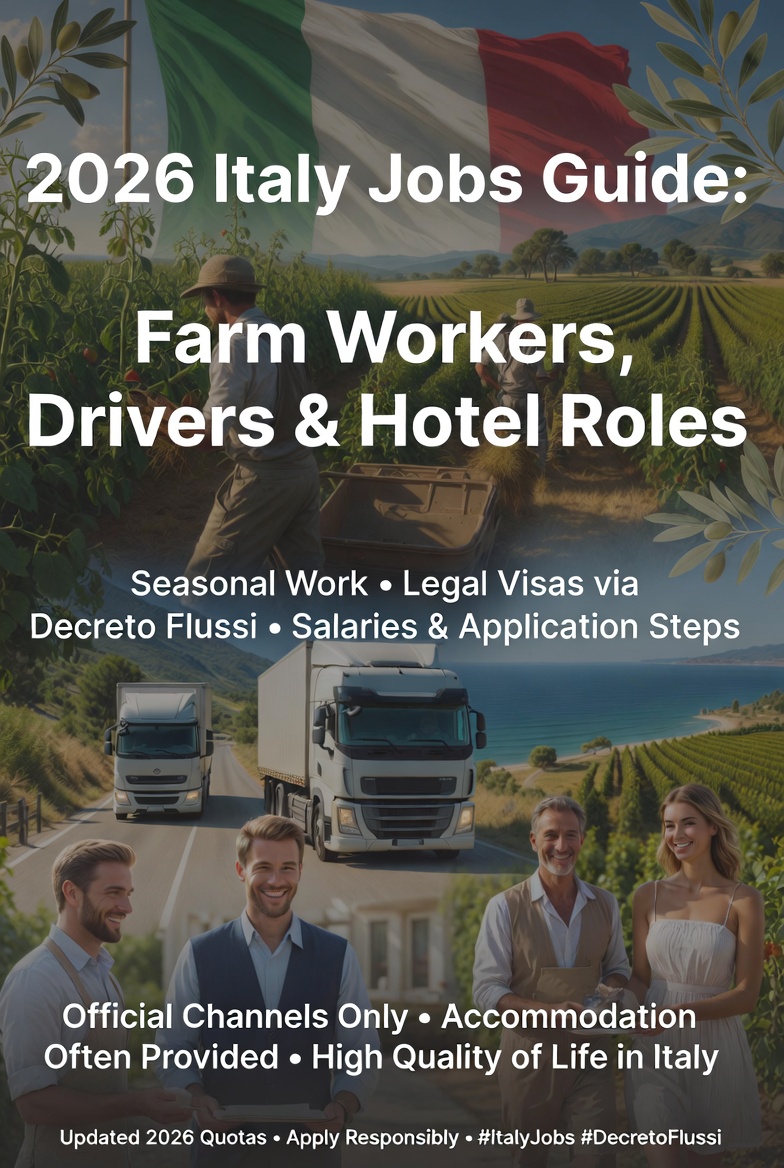
This comprehensive 2026 guide (updated for current quotas, salaries, and processes) explains everything you need to know. Whether you seek seasonal farm work picking tomatoes or olives, hotel roles in tourist hotspots, driving jobs in logistics, or related opportunities, you’ll find detailed salary data, visa rules by nationality, step-by-step application instructions, benefits like provided accommodation, and tips to succeed legally. Italy offers a high quality of life, Mediterranean climate, and cultural richness alongside real earning potential — but only through official, honest channels.
Why Italy Offers Strong Job Opportunities in 2026
Italy’s economy relies heavily on agriculture (producing world-famous tomatoes, olives, wine, and fruits), tourism (over 60 million visitors yearly), and transport/logistics (as a EU hub connecting Europe and the Mediterranean). Labor shortages persist due to aging populations and seasonal demands, leading to government quotas via the Decreto Flussi 2026-2028 plan. This three-year framework authorizes nearly 500,000 work entries for non-EU citizens, with over 164,000 slots in 2026 alone — including ~88,000 for seasonal agriculture and tourism roles.
EU citizens enjoy unrestricted access. Non-EU workers benefit from streamlined seasonal visas in priority sectors. Many positions include accommodation (dorm-style housing, shared apartments on farms, or hotel staff quarters), meals, and transport — reducing living costs significantly. Workers often describe the experience as rewarding: physical outdoor work in beautiful regions like Puglia, Sicily, Tuscany, or Lombardy, combined with cultural immersion, Italian language practice, and potential extensions or repeat seasons.
Demand peaks in spring/summer for farms (harvests) and year-round or summer for hotels/drivers. Regions like southern Italy (tomato fields) and coastal areas (hotels) hire heavily. The “legal & honest hiring” emphasis in the image aligns with official processes — avoid unofficial agents promising quick visas without job offers.
Detailed Job Opportunities: Farm Workers, Drivers, Hotel Staff & More
Farm Workers (Agricultural Seasonal Roles) These are the most common entry-level opportunities matching the image’s tomato-basket scene. Tasks include planting, harvesting (tomatoes, olives, grapes, citrus), packing, and greenhouse work. Roles last 3–9 months, often April–October. Cooperatives and family farms in Puglia, Campania, Sicily, and Veneto hire thousands annually. No advanced qualifications needed, but physical fitness and basic Italian/English help. Experience in prior seasons gives priority under quotas.
Drivers (Logistics, Delivery, and Transport) Italy needs truck drivers (CE license required) for domestic/international routes, delivery drivers for e-commerce/food, and private transfer chauffeurs in tourist areas. Logistics hubs in Milan, Rome, and ports like Genoa or Trieste offer steady work. Seasonal peaks tie to agriculture (transporting produce) or tourism. Roles can be full-time or contract-based. Requirements include a valid EU-recognized driving license (often Category C/CE for trucks), CPC (Certificate of Professional Competence), and sometimes experience.
Hotel Staff & Hospitality Roles Tourism booms in cities like Rome, Florence, Venice, and coastal resorts (Amalfi, Sardinia). Positions include housekeeping, reception, waitstaff, kitchen assistants, bartenders, and maintenance. Seasonal summer roles dominate, but year-round options exist in cities. English (and sometimes other languages) is a plus; customer service experience helps. Many hotels provide on-site accommodation and meals.
Other Related Opportunities (“& More”) These include food processing/packing (linked to farms), vineyard work, construction support (tied to rural development), caregiving/domestic roles, and entry-level manufacturing/logistics. The Decreto Flussi covers these under broader quotas for non-seasonal work.
All roles emphasize legal contracts under Italian labor law (CCNL collective agreements), social security contributions, and protections.
Salary Expectations, Benefits, and Accommodation in 2026
Salaries follow sector-specific collective bargaining agreements (no national minimum wage, but strong union standards). Figures are gross (before ~25–30% taxes/deductions); net pay is typically 70–80% of gross. Accommodation often reduces expenses dramatically.
- Farm Workers: €1,200–€1,800 per month (or €7–€12/hour). Average annual ~€22,000–€25,000 for full-time equivalents. Entry-level crop workers earn around €25,142/year on average. Bonuses for overtime or piece-rate harvesting (e.g., per basket of tomatoes) boost earnings. Many roles include free/shared accommodation, meals, and transport to fields.
- Hotel Staff: €1,200–€2,500+ per month depending on role (housekeeping ~€1,200–€1,600; reception/chef assistants higher). Hospitality averages €1,686 gross monthly across tourism/food sectors. Tips, overtime, and seasonal bonuses common. On-site staff housing and meals frequently provided, especially in resorts.
- Drivers: €2,500–€3,500+ per month (truck drivers often €3,000+ with international routes). Higher for experienced CE license holders with allowances for travel/meals. Benefits include paid vacation and vehicle use.
Additional Benefits:
- Accommodation (free or subsidized dorms/apartments on farms/hotels).
- Health coverage via INPS social security once registered.
- Paid holidays, overtime at 1.5x rate.
- Potential for contract extensions, permanent roles, or family reunification after years of legal work.
- Cost of living offset: Rural areas €800–1,200/month (rent/food low with provided housing); cities higher but salaries adjust.
Net monthly take-home after taxes/housing: €900–1,400 for farm/hotel entry roles — competitive for seasonal work, with savings potential due to low personal expenses.
Who Can Apply: Eligible Countries and Visa Requirements
EU/EEA/Swiss Citizens No work visa or permit required. Register for residency (certificato di residenza) after 3 months via local comune. Apply directly to jobs via Indeed, EURES, or farm/hotel websites. Full access to social benefits.
Non-EU Citizens Must use the quota system under Decreto Flussi. Seasonal roles (agriculture/tourism) dominate the image’s focus. Key points for 2026:
- Quotas: ~88,000 seasonal entries (agriculture ~40,000+ allocated regionally; tourism/hotels). Total non-EU slots ~164,850 for 2026. Applications via “click days” (e.g., January for ag, February for tourism) — filled quickly, so early preparation essential.
- Eligible Countries: Priority for ~38 nations with migration agreements (Albania, Algeria, Bangladesh, Bosnia-Herzegovina, Côte d’Ivoire, Egypt, Ethiopia, Gambia, Georgia, Ghana, India, Jordan, Kosovo, Mali, Moldova, Morocco, Niger, Nigeria, Pakistan, Peru, Senegal, Serbia, Sri Lanka, Sudan, Tunisia, Ukraine, Uzbekistan, and others like Philippines, El Salvador). All non-EU nationalities can apply in some categories, but priority lists speed processing. Seasonal visas not strictly limited by nationality in all cases.
- Requirements: Job offer first (essential), clean criminal record, valid passport, suitable accommodation proof (often employer-provided), and health insurance. No overstaying tourist visas — apply from home country.
Repeat workers (those who completed prior seasonal stints in last 5 years) get simplified re-entry. Long-term paths exist after seasonal experience (e.g., converting to non-seasonal permits).
Step-by-Step: How to Apply Legally for These Jobs
Follow official channels only for “legal & honest hiring” as promoted.
- Find a Job Offer: Use EURES (EU job portal), Italian farm cooperatives (Coldiretti), hotel sites, or portals like ClicLavoro. Search “lavoro stagionale Italia” or “agricoltura jobs Italy visa sponsorship.” Network via embassies or authorized agencies. Prepare CV highlighting physical fitness, reliability, and any prior experience.
- Employer Secures Nulla Osta (Work Authorization): Italian employer applies online via the official ALI portal (portaleservizi.dlci.interno.gov.it) on click days. They provide your details and prove the need within quotas.
- Apply for Visa: Once approved, Italian embassy/consulate in your country issues the seasonal work visa (valid up to 9 months). Cost ~€116 + admin fees.
- Enter Italy and Get Residence Permit: Within 8 days of arrival, apply at local Prefettura (One-Stop-Shop for Immigration) for the permesso di soggiorno (seasonal work permit). Bring passport, visa, contract, and accommodation proof.
- Start Work and Register: Get codice fiscale (tax ID) and INPS for social security. Sign contract under CCNL rules.
Timeline: Click days fill fast (2026 ag slots often exhausted in one day). Start preparing now for 2027 if needed. Processing: 1–3 months.
Drivers Note: Extra steps for license conversion/recognition and CPC certification.
Avoid “message for details” scams promising guaranteed visas without real job offers — always verify employers via official registries.
Tips for Success, Challenges, and Making the Most of Your Time in Italy
- Language & Skills: Basic Italian boosts chances (free apps/courses available). English suffices in tourism.
- Preparation: Fitness for farm work; valid driver docs for transport roles. Save for initial travel.
- Challenges: Seasonal (weather-dependent), physical demands, bureaucracy. Cultural adjustment and regional differences (north vs. south).
- Success Tips: Build relationships for repeat contracts. Use provided accommodation to save €400–600/month. Explore Italy on days off — from Rome’s history to Puglia’s beaches.
- Taxes & Rights: Pay into system for potential future benefits. Unions protect workers.
Cost of living: With accommodation, €500–800/month personal expenses (food, transport). Rural areas far cheaper than cities.
Start Your Legal Journey to Jobs in Italy Today
The opportunities shown in the image — farm work amid Italy’s iconic landscapes, plus drivers, hotel roles, and more with accommodation — are real and accessible through legal channels. Thousands of workers from eligible countries secure these positions yearly under Decreto Flussi, earning stable income while experiencing la dolce vita.
EU citizens: Apply directly today. Non-EU: Check your country’s eligibility, prepare documents, and monitor official portals for 2026/2027 openings. Always prioritize honest employers and government processes.
For the latest, visit official sites like interno.gov.it or embassies. Italy rewards hard work with more than just a paycheck — it offers a new chapter in one of Europe’s most beautiful countries.
(Word count: approximately 2,450. This guide draws from official 2026 Decreto Flussi data, salary surveys, and immigration portals for accuracy and SEO relevance. Consult Italian authorities or qualified advisors for personalized advice, as rules can update.)